
August 27, 2026
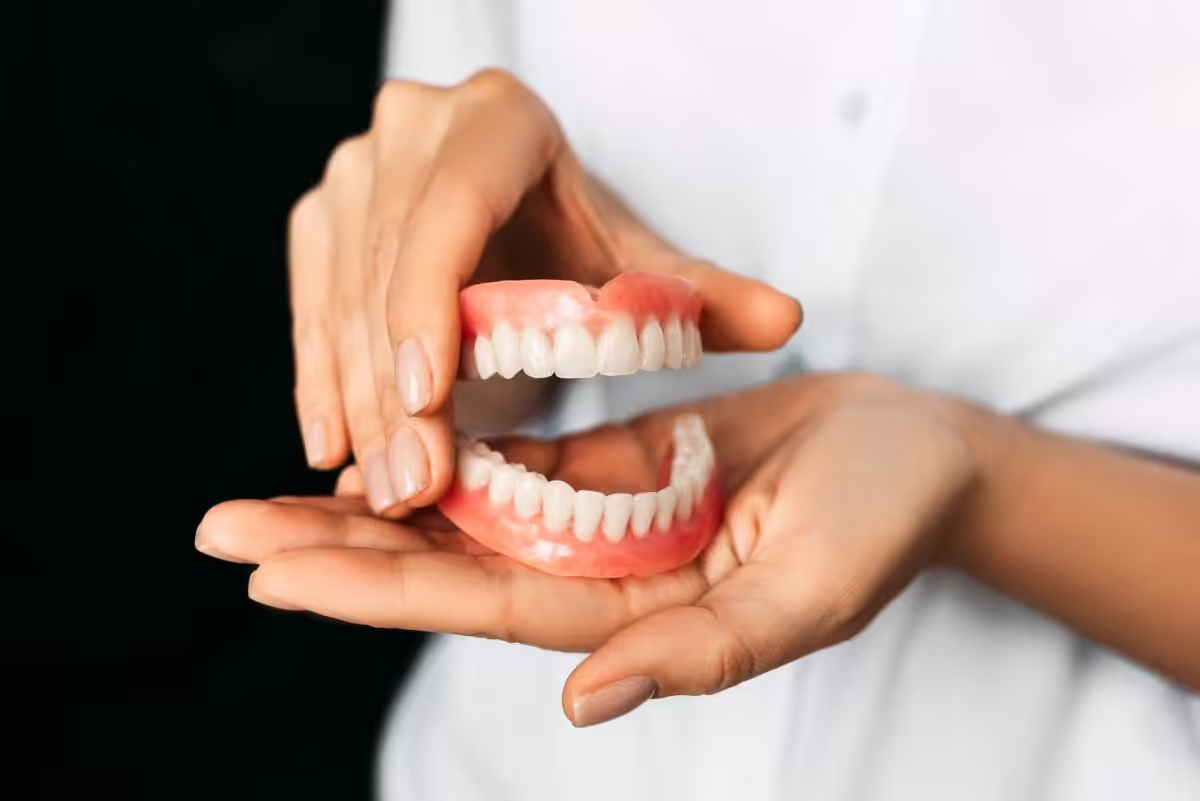
Dental implants are today’s premier tooth replacement option. With many advantages over traditional removable dentures, these appliances enhance your smile while protecting your long-term oral health.
This article explains why dental implants provide superior protection for your oral health when compared to traditional dentures.
How Dental Implants Protect Your Oral Health vs. Dentures
If you ask a dentist or oral surgeon whether they prefer their patients receive dental implants or dentures, they will typically say that dental implants carry greater benefits for oral health. However, not every patient has the option to receive dental implants, including those with certain chronic health conditions.
Dental Implants
Since a dental implant is seated inside the jawbone, it fully integrates with the body. Thanks to the natural process of osseointegration, an implant feels like a natural tooth when chewing or smiling. It keeps the jawbone strong by providing chewing stimulation.
Dental implants require the same every day care that your natural teeth would. Brushing, flossing/waterflossing is required to maintain the health of the implants. It is important to continue hygiene care with your routine dental office.
Conventional Dentures
A conventional denture sits on top of the gums. It does not have a physical connection to the jawbone, so it may slip or become dislodged when you eat, smile, or laugh. These dentures often contribute to a “sunken” facial appearance characteristic of a patient with missing teeth.
Oral hygiene is just as important with dentures, patients have to take meticulous care of their appliances to prevent bad breath and bacterial growth.
Comparing Dental Implants and Traditional Dentures
Dental implants generally improve on conventional dentures. Understanding the pros and cons of each tooth replacement method can help steer you toward the right decision for your oral health and your budget.
Pros and Cons of Dental Implants
Pros:
- Implants are generally more durable than traditional dentures.
- Implants protect your oral health by providing chewing stimulation that keeps the jawbone healthy and strong
- No slipping, clicking, or trapping food beneath the appliance
- Although speech can be affected by any new prosthesis, adjustment time is significantly less when implants are involved.
- Allow you to eat a healthier and more varied diet
- Implants last longer than dentures, 10 to 20 years as opposed to 5 to 7 years
Cons:
- More costly up front than traditional dentures, especially when considering single-tooth implants
- Slower process to receive dental implants and allow full healing to the point where you can eat your regular diet
- Implants can fail if you do not take proper care of them
Pros and Cons of Traditional Dentures
Pros:
- Faster process than dental implants
- Less expensive than implants on a per tooth basis
- Ability to match the appearance of your healthy smile and restore your confidence
- Good for patients missing a few teeth or an entire arch
Cons:
- Conventional dentures allow the jawbone and alveolar ridge to lose volume over time, meaning that you may need additional surgeries to keep your dentures in place.
- Dentures need more periodic maintenance than dental implants and often require relining when they do not fit well.
- Could cause speech difficulties, especially when the dentures do not fit well or when you are first becoming accustomed to wearing them
- More difficult to keep clean, requiring special tools and solutions
- Some foods are challenging to chew properly while wearing traditional dentures
While each option has pros and cons, consult us to discover which option is best considering your lifestyle and oral health. We want to help you understand your choices and opt for the solution that makes the most sense for you.
A Newer Option: Implant-Supported Dentures
Implant-supported dentures present the best of both tooth replacement options. With implant-supported dentures, you can receive an entire arch of replacement teeth at once. This option is excellent for patients who are already missing most of their teeth or have severe tooth damage that can’t be restored.
An implant-supported denture needs only a handful of anchors (as few as 4) to stay attached to the jawbone. Your appliance will not be removable except by a dental professional. You will return to your dentist regularly to have your implant-supported dentures checked and professionally cleaned.
Frequently Asked Questions About Dental Implants
How do I take care of my dental implants?
Caring for your dental implants can be as simple as caring for healthy, natural teeth. Brush and floss them as you would your natural teeth. For implant-supported dentures, we recommend a water flosser for convenience and cleaning power. Keep all of your dental appointments to check the health of your implants both above and below the gumline.
Does long-term denture wear cause oral damage?
Long-term denture wear can affect your alveolar ridge (where your original teeth were located) and your palate. Long-term denture wearers may need to undergo ridge preservation surgery and other procedures to boost their jawbone health so dentures will stay in place.
How long does it take to get dental implants?
The dental implant process takes a significant investment in your time, but the results are absolutely worth it. The entire process could take approximately 6 to 12 months, more if you need a dental bone graft or another preparatory surgery.
How many implants do I need to receive to place implant-supported dentures?
Unlike single-tooth implants, which require a separate anchor for each tooth, implant-supported dentures can connect to as few as four implant posts.
Does insurance cover dental implants?
Under many insurance plans, you can receive partial coverage for these appliances. Many plans cover crowns, bridges, and dentures, meaning that they may cover the restoration that completes your implant. Consult your insurer for full details on your policy.
Investing in dental implants can change your life for the better. Our team at Northern Virginia Oral Surgery Centers wants to show you how we can complete your smile while safeguarding your oral health. Reach out to us today to schedule your implant consultation.