
October 30, 2026
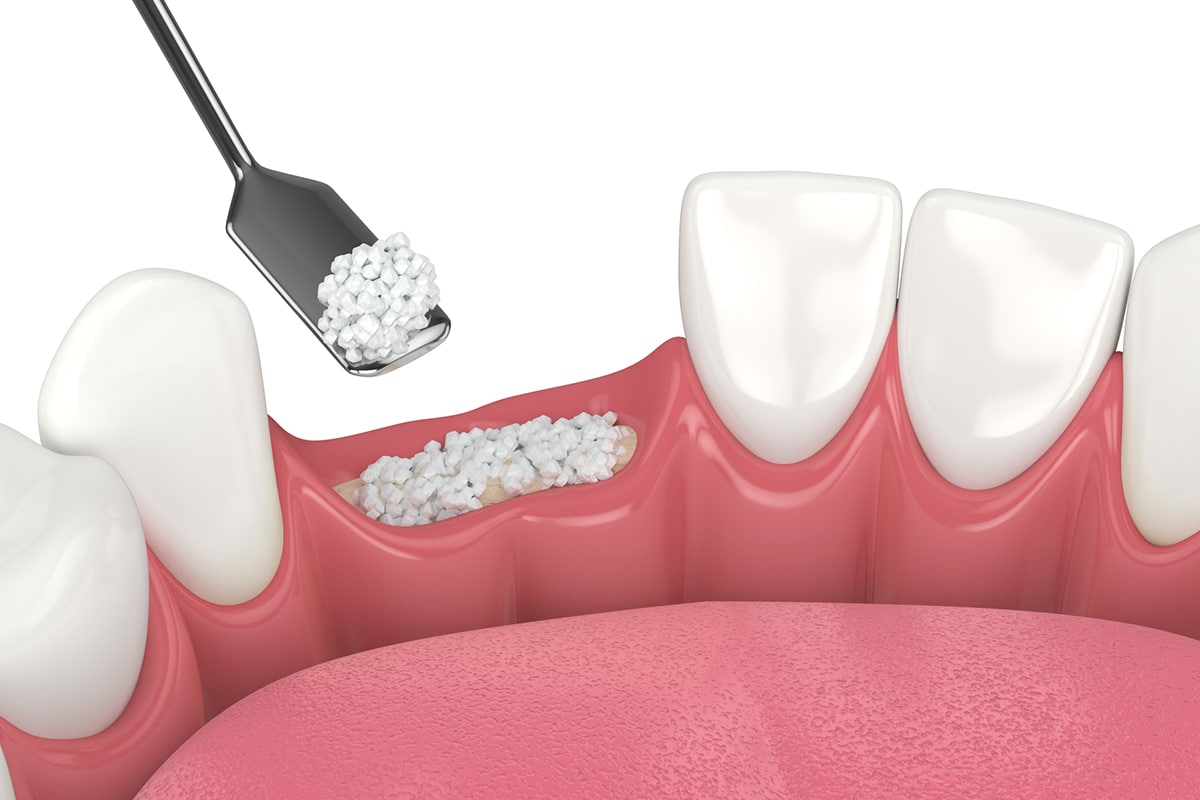
If you have been missing a tooth for more than a few months or plan to wait after extraction before receiving a dental implant, we may recommend a procedure called jaw bone grafting. While the name may seem intimidating, the procedure is routine and well tolerated. This guide explains why we recommend bone grafting for certain patients before dental implant surgery.
Why You May Need Bone Grafting Before Implants
After tooth loss, the jawbone loses strength in and around the empty socket. The jawbone relies on natural stimulation from chewing to stay healthy and strong. Without this stimulus, the jaw around the socket begins to weaken and reabsorb. Jawbone resorption can happen surprisingly quickly. Research suggests the jawbone can lose as much as 25% of its volume in the first year after tooth extraction, and it worsens over time.
The dental implant process relies on a strong bond between the implant anchor and the jawbone. If your bone lacks strength and volume, we can't safely place your dental implant anchor.
How We Determine Whether You Need Bone Grafting
We use a highly advanced CBCT (Cone Beam Computed Tomography) X-ray scanner to take comprehensive digital images of your teeth and supporting bone. This scanner produces detailed 3-D images and allows your doctor to assess your jawbone health. If you have adequate bone volume, we can proceed with implant surgery. If you do not, we can reinforce the area with a bone grafting procedure.
How Jaw Bone Grafting Works
To create a dental bone graft, we make a small opening in your jawbone at the desired implant site. We introduce ground, sterilized bone material. This material can be natural or synthetic. We cover the area with a dissolvable membrane to keep the ground bone in place while it heals.
Over the next 4 to 6 months, your natural jawbone uses the introduced material as a framework, or scaffold, to build healthy new tissue. We monitor your healing carefully. When we determine your jawbone is strong enough to support a dental implant, we can schedule your surgery.
Increasing the Chance of Dental Implant Success Through Jaw Bone Grafting
Waiting for your bone graft to heal enough to place your implant may feel long, but it is a vital step to ensure the procedure’s success. We want our valued patients to understand that a bone graft is an investment in your oral health and overall wellness. If you have any questions or concerns about bone grafting or dental implants, we are here to help.
Frequently Asked Questions About Jaw Bone Grafting
What are other reasons why I may need a bone graft before getting implants?
In addition to tooth loss, you may need a bone graft if you have experienced dental trauma, gum disease, or a congenital condition. Patients with lower jawbone volume for any reason are good candidates for this procedure.
Is a bone graft procedure uncomfortable?
We use local anesthesia to place a bone graft, and our patients report that the procedure is not painful, but you may feel some pressure. We can often place a bone graft during the same procedure as a tooth extraction, combining the two procedures efficiently. We also have other sedation options if you feel anxious or need extra support.
Does bone grafting involve any risks?
Any surgical procedure carries some risk, but dental bone grafting is generally straightforward. Possible risks include surgical site infection, slow healing, and nerve damage. If you have additional concerns about risks and side effects, your oral surgeon can answer them during your consultation.
Is the new tissue the same as my natural bone?
Yes, bone grafting typically produces excellent results. Grafted bone is just as strong as healthy natural bone.
How long do I have to wait after the bone graft to receive my implant anchor?
A simple socket graft typically takes about 4 to 6 months to heal enough to accept an implant. Other graft types, like ridge augmentation or sinus lifts, take longer to heal before surgery can proceed.
At Northern Virginia Oral Surgery Center, we use state-of-the-art equipment and techniques to support successful bone grafting. Contact us today to schedule a consultation and discover whether you need a bone graft before proceeding with dental implants.