
Sleep Apnea Treatment


Video Transcript: Understanding Obstructive Sleep Apnea and Surgical Solutions

Video Transcript: Understanding Obstructive Sleep Apnea and Surgical Solutions

The following is a full text transcript of the video for accessibility. Total runtime: approximately 7 minutes, 55 seconds.

Introduction to Obstructive Sleep Apnea

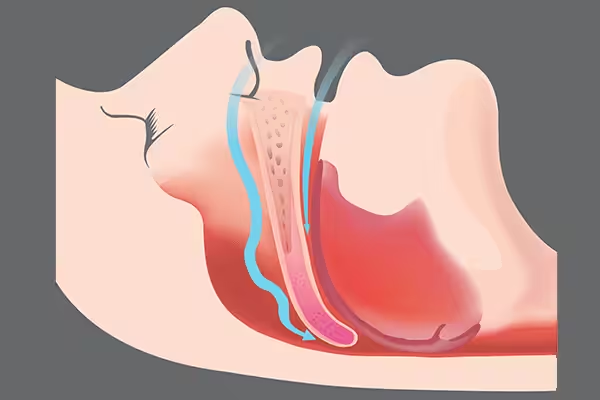
Narrator: Statistics tell us that approximately 40% of people over the age of 40 snore, and half of them snore every night. In most cases, snoring is nothing more than an inconvenience, but for some people, men and women, it may be a symptom of a serious condition known as obstructive sleep apnea, or OSA. During sleep, the upper airway narrows and causes OSA patients to temporarily stop breathing. This pause in breathing is referred to as an apnea.

Narrator: When one occurs, an impulse is sent through the brain that wakes the patient just enough to restart the breathing process. This cycle repeats itself many times during the night, often without the patient being aware that he or she has stopped breathing. In severe cases, the apnea may last for as long as 90 seconds and may occur hundreds of times a night. The result is a lack of sleep or poor quality sleep and a number of health-related problems.

The Risks and Symptoms of OSA

Narrator: OSA is a serious problem. Patients who suffer from it have a higher risk for high blood pressure, heart disease, stroke, impotence, and thinking and memory problems. OSA can also cause excessive daytime sleepiness, performance changes at work or school, marital and social problems, and an increased risk of accidents or injuries.

Narrator: An estimated 35 million Americans have sleep-related breathing problems. Common symptoms include daytime drowsiness, snoring with pauses in breathing (often observed by a bed partner), gasping or choking during sleep, and restless sleep. Other symptoms include a problem with mental functions, poor judgment or lack of focus, memory loss, being quick to anger, high blood pressure, nighttime chest pain, depression, morning headaches, reduced libido or impotence, and frequent trips to the bathroom at night. If you have two or more of these symptoms, or if someone has mentioned your loud snoring and noticed that you often wake up abruptly gasping for air, see your physician.

Diagnostic Testing and Treatment Options

Narrator: If your doctor suspects OSA, you may be referred to a sleep clinic for a special overnight test that monitors your nighttime sleep patterns and gathers data about each apnea and other problems that disturb your sleep. Depending on the severity of your condition, treatments may include behavior modification or simple lifestyle changes such as weight loss or a change of sleeping position. Treatment may also include oral appliances that bring the jaw forward during sleep to keep your airway open, or CPAP or BiPAP devices that use positive air pressure to keep the airway open during sleep.

Narrator: If devices or oral appliances are ineffective, surgical treatments may be indicated. Your oral and facial surgeon will work closely with your sleep medicine physician to determine the best treatment for you. Maxillomandibular Advancement, or MMA, has been shown to be a very effective procedure for patients with moderate to severe OSA. By surgically repositioning your upper and lower jaws, your oral and facial surgeon can open the airway and alter the position of the tongue and soft tissues. As a result, sleep is improved. Obstructive sleep apnea is a serious condition, but it is treatable. Your oral and facial surgeon is ready to help as an integral part of a professional team that treats sleep-related breathing disorders.

Patient Perspectives: Living with Sleep Deprivation

Anthony: My name's Anthony and I snored my whole life. My boys would make fun of me when we would do sleepovers or whatever. They'd either put hot sauce on my lips to make me wake up, hit me with a pillow, or something. Like, it was crazy. I'd wake the whole house with snoring. And I'm talking as a young, young guy.

Jacqueline: When I was a little kid, about four or five, I was diagnosed with sleep apnea. It would take me hours to get to sleep and then I would have interrupted sleep throughout the night. I remember in kindergarten, I woke up during nap time and the entire class was staring at me. As a five-year-old, that's just a terrifying experience.

Jacqueline: My attitude without the rest from sleep apnea wasn't the best. It took a little extra effort to smile and get going. It is such a disadvantage to start the day off in a bad mood, deprived of sleep. You don't wake up and say, "Good morning." Focus was a real issue. I was just so groggy. Most of my focus was more on staying awake than it was on the task at hand.

Anthony: Getting a little older and living with my girlfriend at the time, Jill was like, "I'm tired of you waking me up, and you fall asleep before me. Something's got to change. Either you go or the snoring goes."

Seeking a Permanent Surgical Solution

Anthony: I went to my general practitioner, and he prescribed medication for me—typical medication that people take for sleeping problems. The medicine became very, very inconsistent, and I felt like I became very, very dependent on it, and that scared me. I went back to my general practitioner and said, "I need a permanent solution." He suggested I go see an oral surgeon to see if there was anything they could do to create space to help with the breathing.

Anthony: My oral surgeon was very professional and extremely knowledgeable. He sat me down and explained surgically what my options were. The oral surgeon, while in the office, allowed me to speak with somebody two days out of surgery. So it was just great to hear from somebody just out of the surgery that I'm going to be going into. He actually got out portfolios of all these different patients who had had the different surgeries, showing step-by-step what they would go through and the alignments they would change.

Life After Jaw Surgery

Anthony: The positive effects were immediate—just simply and immediately. The first time I was able to breathe in was amazing. I mean, I'll relive that day every day if I could. This is what I was missing out on—like all this air, just being able to relax like this, put my head on the pillow, and fall asleep after five or ten minutes like a normal human being. That sounds like nothing, but it's everything. Talk to anybody who can't sleep. It's true, people take it for granted, man. It was eye-opening. The first actual real breath of my life is kind of what it felt like. It was awesome. The snoring's gone. I literally don't snore anymore, I've been told. So if Jill approves, then I'm good.

Jacqueline: I had more patience, I wasn't snapping, and people noticed the difference. Work was easier. I'm a completely different person. I have energy now. Now I can sleep an entire night—seven, eight, or when I am particularly lazy, a whole ten hours—and I don't wake up once. It's amazing.

Anthony: Do not waste your time with the pills. Do not do over-the-counter stuff—whatever natural, herbal, all that stuff. It's all great, but it is not permanent. I went to the oral surgeon, I got the surgery, and I have no problems. End of story. This oral surgeon literally helped change my life for the better. Just walking to a store, I could take a deep breath while walking instead of panting. And I had my oral surgeon to thank for that.


End of transcript.


Obstructive sleep apnea is an ongoing condition that disrupts sleep.


Sleep apnea is a disorder in which a patient experiences one or more pauses in breathing or shallow breaths during sleep. The sleep disruption caused by sleep apnea can negatively impact your quality of sleep, leaving you tired and irritable.

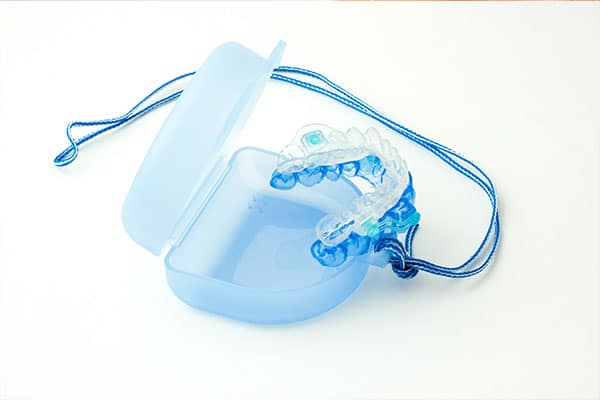
Mild sleep apnea can often be treated with lifestyle changes such as losing weight, positional therapy or with the addition of an oral appliance to help maintain an open airway while you sleep.

  • Could sleep apnea be disrupting your sleep?

    • Do you wake up with a dry mouth?
    • Do you wake up gasping for air?
    • Do you suffer from excessive sleepiness during the day?
    • Do you experience irritability?
    • Do you have frequent morning headaches?
    • Does your partner tell you that you snore or that you stop breathing while you sleep?


Sleep apnea Photo

True or False

Sleep Apnea can help improve your overall health and wellbeing.

True

Treatments such as oral appliance therapy can significantly improve the quality of your sleep, which then improves your mood and overall health.


Treatments for Sleep Apnea


  • Oral Appliance Photo

    Mild Sleep Apnea

    Oral Appliance Therapy (OAT) can often be an effective treatment for patients suffering from snoring and obstructive sleep apnea. Patients can achieve relief using a custom removable oral appliance that adjusts the position of the lower jaw and tongue to minimize airway obstruction.

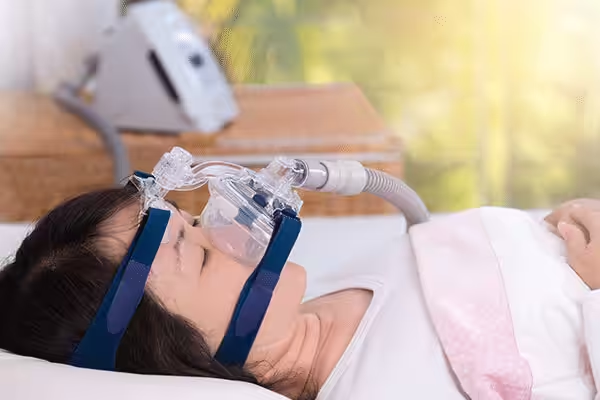
  • CPAP Machine Photo

    Moderate to Severe Sleep Apnea

    A breathing device called CPAP (continuous positive airway pressure) may be an effective treatment option for moderate to severe sleep apnea. A CPAP machine uses a mask that fits over your mouth and/or nose and gently blows air into your throat. This constant air pressure helps keep your airway open while you sleep. An oral appliance can be used in conjunction with or as an alternative to the CPAP if a patient is unable to tolerate using the CPAP machine. In more severe cases of sleep apnea, corrective jaw surgery to adjust the bones of the upper and lower jaw to create an unobstructed airway may be necessary. Our doctors can help create a customized plan that fits your needs.


Frequently Asked Questions About Sleep Apnea Treatment