
August 30, 2026
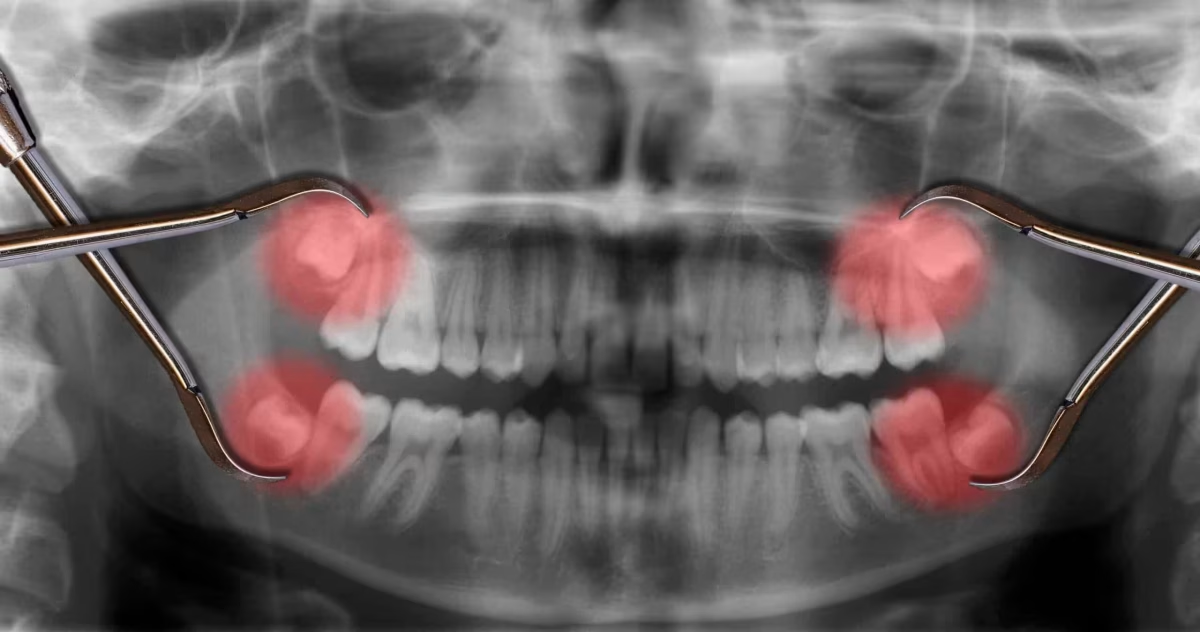
When considering wisdom teeth removal surgery, it’s important to know when these teeth must come out and whether you can delay the procedure or safely leave the teeth in place. Not all wisdom teeth cause problems, but many do cause discomfort and tooth crowding.
In this article, we will explain when and why to remove wisdom teeth as well as familiarize you with the surgery for yourself or your teen.
When to Schedule Wisdom Teeth Surgery
Impaction
An impacted tooth is defined as a tooth that cannot erupt normally above the gumline. Either the tooth is in a position that does not allow eruption, as in a tooth lying horizontally along the gumline instead of vertically, or the tooth is too crowded to emerge. To protect your oral health or that of your child, these teeth should be extracted before they can cause further issues.
Erupting Above the Gumline
When wisdom teeth erupt, they seldom do so in the expected manner. Teeth may emerge and then recede, causing discomfort and infection. In this case, you are better off without them.
Disrupting Tooth Alignment
Wisdom teeth may push on other teeth, causing severe crowding and tight contacts between teeth that are challenging to keep clean. Since flossing becomes difficult, tooth decay and gum disease could develop.
Removing Wisdom Teeth Before Roots Have Fully Developed
Removing the teeth at an earlier age is easier than waiting until the roots have developed fully. As patients progress to adulthood, removing the teeth is more challenging and causes longer recovery times.
Damaging Adjacent Teeth
In some cases, tooth impaction is so severe that it damages the adjacent molars. These teeth need to be removed as soon as possible.
When to Wait and Monitor Wisdom Teeth
If the wisdom tooth is not impacted, is not interfering with other teeth, and is not causing symptoms, we may leave it in place and monitor its progress. Some wisdom teeth can be safely left alone. If you do have wisdom teeth in place, your family dentist will keep a close eye on them through annual X-rays. You should report any symptoms you experience to your dentist as soon as they develop.
The Process of Wisdom Teeth Surgery
Imaging and Assessment
Our doctor will evaluate your teeth on a case-by-case basis. We will use an advanced CBCT (Cone Beam Computed Tomography) X-ray machine to examine your wisdom teeth and the anatomy of your jaw and surrounding areas. This scan helps us determine whether your teeth need to be removed or can be left in place. It also helps our surgeon understand the placement of your nerves, blood vessels, and sinuses, enabling a smooth procedure.
Anesthesia
We use local anesthesia to prevent pain during the procedure. We also offer multiple sedation options, including IV sedation, conscious oral sedation, and nitrous oxide, to help you relax during your procedure, if desired.
Removal
The surgeon makes a small incision in your gum to access the bone. If the tooth is not accessible due to impaction or because it has not fully erupted, they will make an opening in the jawbone and remove the tooth. Typically, you will receive a few sutures to close the surgical site.
Recovery
Always follow our post-surgical instructions regarding cleaning the surgical site, what you can eat and drink, and how to prevent infection or a dry socket.
Don’t Put Off Wisdom Teeth Surgery
Wisdom teeth surgery is a routine procedure, but patients have more difficulty recovering as they age. If we recommend surgery for your teen or young adult, we encourage you to schedule the procedure at an earlier age. If you wait until later, you may face a longer and more uncomfortable recovery process.
Frequently Asked Questions About Wisdom Teeth Removal
Why do people have wisdom teeth if they do not erupt?
They are leftovers from an earlier time in human history when people had larger jaws to accommodate a third set of molars to chew tougher foods than we regularly eat today. Occasionally, a patient will come to us with a wisdom tooth that has properly erupted and is causing no trouble, but this is an uncommon occurrence. Not everyone has wisdom teeth.
Why do some dental professionals recommend that everyone have their wisdom teeth removed?
Some oral surgeons view the procedure as preventive, even if the teeth are asymptomatic. They reason that the teeth could cause issues in the future and that the surgery is considerably easier in younger adults.
Are there any risks involved in removing wisdom teeth?
A dry socket occurs when the blood clot that forms after surgery does not stay in place. A dry socket is usually preventable with proper post-surgical home care, such as avoiding straws and smoking until the site has healed.
Another potential complication is infection. Keep the surgical site clean according to our instructions. In rare cases, you could experience damage to neighboring teeth, surrounding nerves and blood vessels, sinuses, or the jawbone. We perform these surgeries every day, and the vast majority of our patients have no issues when following our care instructions.
Will I need medication to help with discomfort after my surgery?
Most patients need only over-the-counter medications to control pain. If you feel that you require a prescription, we will discuss it with you.
Can I drive myself home from wisdom teeth surgery?
While you technically could drive yourself home if you had nitrous oxide or went without sedation, it is better to have someone else do it. You may be tired and feeling some discomfort. If you had IV sedation or conscious oral sedation, a driver is not optional. Someone will need to help you arrive and get home safely.
At Northern Virginia Oral Surgery Center, we routinely perform wisdom teeth removal surgery. With multiple area locations, we are convenient to your home, work, and school. We can provide you with a comfortable surgical experience and protect your oral health. Get in touch with us today to learn more.